

 Russia
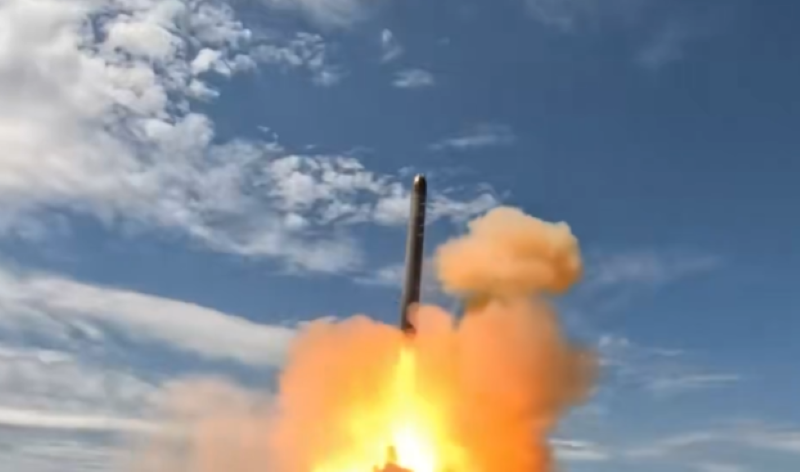
 test-fires Sarmat intercontinental ballistic missile. Photo: MFA Russia/X
Russia
Russia test-fires Sarmat intercontinental ballistic missile. Photo: MFA Russia/X
Putin unleashes Satan 2: Russia tests ICBM with 35,000 km range
Russia has successfully test-fired the Sarmat intercontinental ballistic missile (ICBM), a nuclear-capable system described by the nation as the most powerful missile systems in the world.
According to the Kremlin’s official website, President Vladimir Putin hailed the launch as a significant milestone, stating that the Sarmat is “the most powerful missile system in the world,” comparable to the Soviet-era Voevoda missile currently in Russia’s arsenal.
He further claimed that the Sarmat’s total warhead yield is more than four times greater than that of any existing Western counterpart. Western analysts have nicknamed the system “Satan 2.”The test comes months after the expiration of the last major arms control framework between the United States and Russia that had previously limited deployed nuclear arsenals.
The test comes months after the expiration of the last major arms control framework between the United States and Russia that had previously limited deployed nuclear arsenals.
🇷🇺 On May 12, President #Putin received a report on the successful test of the Sarmat missile.
— MFA Russia 🇷🇺 (@mfa_russia) May 12, 2026
💬 With 35,000+ km range, enhanced accuracy & the ability to overcome all existing & future missile defence systems, Sarmat is a formidable deterrence asset.https://t.co/waBvSOHm7I pic.twitter.com/rBchrCce1r
Putin also highlighted the missile’s advanced capabilities, saying it can follow both ballistic and suborbital flight paths, with a range exceeding 35,000 kilometres. He added that this enables improved accuracy and enhances its ability to bypass current and future missile defence systems. Russia plans to place the Sarmat on combat duty by the end of the year.
What is the Sarmat missile?
The RS-28 Sarmat is a silo-based, intercontinental ballistic missile designed to replace the Soviet-era Voevoda system. It is being developed as part of Russia’s next-generation strategic nuclear forces.
Officials say the system offers major improvements over its predecessor, including greater range, higher payload capacity (throw-weight), faster launch readiness, and enhanced countermeasures designed to penetrate advanced missile defence systems.
Strategic context
The New START treaty between the United States and Russia—which placed verifiable limits on deployed strategic nuclear weapons—has now expired, raising concerns about a renewed arms race and reduced nuclear transparency.
Expert view
Military expert and air defence historian Yuri Knutov, speaking to Sputnik, said the missile’s key feature is its ability to carry multiple independently targetable reentry vehicles (MIRVs), allowing each warhead to strike separate targets independently.
He also argued that even advanced missile defence systems, including the proposed U.S. “Golden Dome” shield, could struggle to intercept warheads that use suborbital trajectories and hypersonic manoeuvring capabilities.
Top Headlines
-
News
After days of silence, China confirms Xi Jinpings India visit for BRICS Summit
September 10, 2026
-
News
ISKCON Juhu in trouble: FDA suspends licences of 3 restaurants over serious hygiene violations
September 09, 2026
-
News
Sona College of Technology's 25th graduation day: 1,325 students receive BE, BTech, ME, MCA, MBA and PhD degrees
September 09, 2026
-
News
Air India sacks Phuket-Delhi pilot who tested positive for psychoactive substance
September 04, 2026
-
News
Gloria Steinem, who gave second-wave feminism its face and its argument, dies at 92
September 04, 2026
-
News
Rs 20 bribe case ends after 30 years as Supreme Court acquits Gujarat employees
August 19, 2026
-
News
RG Kar rape-murder case takes fresh turn as ex-TMC MLA Nirmal Ghosh arrested over cremation probe
August 13, 2026
-
News
Vijay-Sangeetha divorce case closed as wife withdraws petition
August 07, 2026
-
News
Journalist harassment during CJP protest: Kolkata Police recreate crime scene with barefoot accused
July 27, 2026
-
News
Reliance Industries posts record quarterly revenue of 3.4 lakh crore, Jio IPO on the horizon
July 17, 2026